The latest flashpoint in the Strait of Hormuz is not an isolated crisis. It is only the latest sign that the foundations of global shipping have changed.
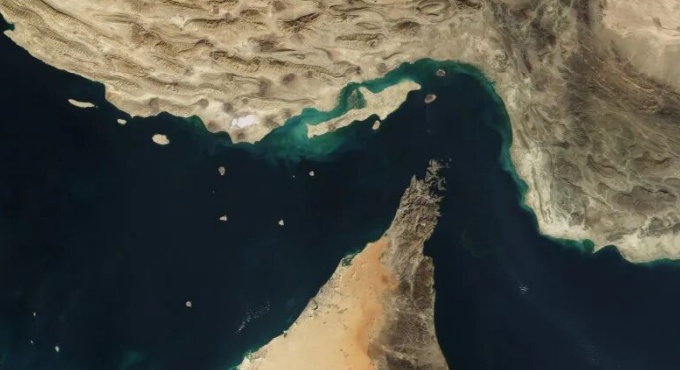
In recent days, tensions around Iran, the Strait of Hormuz, and US actions targeting shipping linked to Iranian ports have once again pushed maritime security to the center of global attention. Iran has dismissed Washington’s moves as bluff and intimidation. Many countries have voiced opposition. IMO Secretary-General Arsenio Dominguez also made clear that, under international law, no country has the right to block navigation through an international strait.
But the real issue goes beyond the legal debate. What matters for shipping is that the Strait of Hormuz is now one more reminder that the world has entered a new phase. For shipowners, cargo interests, charterers, insurers, and financiers, freedom of navigation can no longer be treated as a stable commercial backdrop. It is becoming something that must be defended, priced, hedged, and constantly reassessed.
If we place the major shocks of the past few years on a single timeline, the pattern becomes hard to ignore. The Covid-19 pandemic shattered the illusion that the global logistics system was naturally efficient, smooth, and resilient. Port congestion, crew change disruptions, container imbalances, and inland transport breakdowns exposed just how fragile a highly optimized supply chain could be when hit by a systemic external shock.
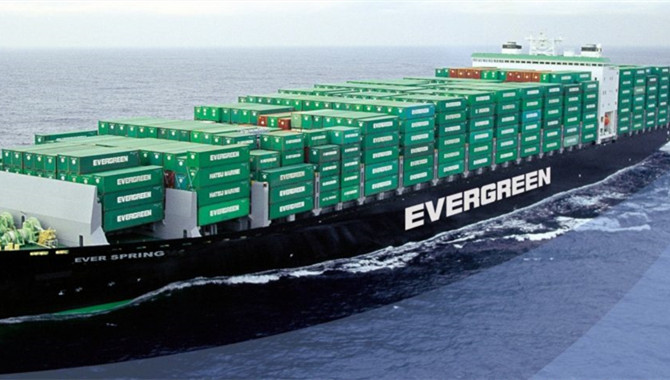
Then came the 2021 Ever Given incident in the Suez Canal. It was, in essence, a single-vessel accident. Yet it dramatically revealed how dependent global trade had become on a small number of maritime chokepoints. Soon after, the Russia-Ukraine war redrew the shipping map of the Black Sea and reshaped grain flows, energy trade, and war-risk pricing. War returned as a decisive force in maritime order.
The Panama Canal drought added another layer to that reality. It showed that the world’s shipping arteries are vulnerable not only to war and politics, but also to climate stress and natural constraints. Since late 2023, the Red Sea crisis has further escalated this pressure. Major liner operators have rerouted around the Cape of Good Hope, and the East-West network that had long relied on the speed and predictability of the Suez route has been forced to adapt.
By 2026, the pattern has become even more pronounced. US efforts to intercept tankers carrying Venezuelan crude, rising risks in Hormuz, and new attempts to constrain maritime traffic related to Iran all point in the same direction. These developments do not mean that global shipping has stopped. Nor do they mean that every waterway is closed. But they do mean that the era in which major shipping routes could be assumed to remain commercially reliable at low risk and low cost is now over, at least for this stage of history.
This is what it means to say that the era of free navigation has ended, at least for now. It does not mean that ships can no longer sail. It means that freedom of navigation is no longer a low-cost default assumption. It has become a contested outcome.
In the past, shipping companies made fleet plans, route plans, long-term contracts, and capital expenditure decisions on the assumption that Suez would remain open, Hormuz would remain passable, Panama would remain broadly stable, and the Red Sea would not become a prolonged high-risk zone. Frictions existed, but they were usually treated as temporary noise.
Today, more and more strategic routes are entering a new condition. In legal terms, they may still be open. In commercial terms, they are no longer fully dependable. A route may still exist on paper, but in practice it may be distorted by war-risk premiums, naval escort requirements, crew safety concerns, charterer hesitation, sanctions exposure, compliance burdens, and shifting government policy. Freedom of navigation has not disappeared, but it has changed from an assumed background condition into something that must be secured through higher cost, stronger organization, and more complex alternatives.
From expanding the pie to dividing the pie: the logic of global economic cooperation is changing
If we see these developments only as a rise in maritime risk, we still underestimate the scale of the shift. What is changing is not just the shipping environment. The deeper change lies in the basic logic that supported global economic cooperation for decades.
After World War II, the global economy followed a broad direction: under a relatively stable international order, countries deepened trade, expanded cross-border specialization, and pursued efficiency to increase productivity and enlarge the overall economic pie.
Shipping was one of the essential foundations of that system. As long as peace broadly held, rules were broadly stable, and key sea lanes remained open, shipping companies could focus on improving turnover, cutting cost, expanding networks, and optimizing fleet structure.
That logic created a powerful path dependency. The industry assumed that the routes would stay open, globalization would keep deepening, efficiency would remain the top priority, and companies that moved faster and cheaper would continue to benefit from trade growth.
Now that logic is under pressure.
One important reason is that while the world has certainly made technological progress in recent decades, it has not yet seen a new general-purpose technological revolution on the scale of steam power, electricity, or the internal combustion engine—one powerful enough to drive sustained, broad-based, economy-wide productivity gains at the global level. Artificial intelligence may still deliver that kind of transformation, but so far it has not yet done so in a way that fundamentally resets the world’s growth trajectory.
As a result, the global economy is still growing, but the pace of growth, the certainty of productivity gains, and the confidence around future expansion are all weaker than before. The pie is still growing, but not as fast, not as smoothly, and not as predictably.
In such an environment, competition over resources, markets, rules, routes, and security naturally intensifies. Tensions that could once be absorbed by growth increasingly return as disputes over allocation, leverage, and strategic control. This is why so many of today’s conflicts, sanctions, blockades, supply-chain reorganizations, and regionalization trends are not isolated events. They are signs that the global economy is sliding from a logic of growth and expansion toward a logic of distribution and contest.
When that happens, the old model—built on order, efficiency, and global optimization—comes under strain. Efficiency can no longer always override security. The lowest cost no longer automatically means the best system outcome. Globalization has not disappeared, but it now carries a much heavier layer of geopolitical risk, security concerns, and strategic redundancy.
When uncertainty becomes normal, shipping must shift from efficiency thinking to resilience thinking
In this new world, the biggest risk for shipping is not any single crisis. The bigger risk is that crisis is becoming the new operating environment.
The industry used to explain the market mainly through supply, demand, freight, vessel availability, and cycles. In the future, it will need to fold geopolitics, security constraints, route substitution, policy volatility, control of nodes, supply-chain resilience, and system redundancy into the same framework.
When uncertainty becomes normal, resilience may matter more than efficiency. Efficiency helps a company move fastest in calm seas. Resilience helps it stay upright in a storm.
That is not a slogan. It is a strategic reality.
In the past, customers focused on freight rates, available slots, and transit speed. Now many of them are asking a different question. They no longer care only about the efficiency of one transport leg. They care about the reliability of the full delivery chain. A manufacturing client does not only want to know whether cargo can be booked. It wants to know whether cargo can still arrive on time in a highly unstable environment. A resource buyer does not only want to know whether a cargo can be loaded. It wants to know whether critical commodities can be moved back safely, consistently, and under control over the long term.
Transport is therefore becoming less of a cost item and more of a strategic function. Competition in shipping is moving from freight-price competition toward competition in delivery certainty. Words such as visibility, control, predictability, safety, resilience, and redundancy may sound like fashionable industry language, but they are becoming core capabilities that will define which companies survive and which fall behind.
That also means the key questions for shipping companies are changing. The question is no longer only how to drive unit cost lower. The question is whether a company has an alternative route when a main corridor fails, whether it has nodes and local teams if a regional crisis escalates, whether it can redesign delivery chains when customer flows are disrupted, and whether its system can absorb sudden changes in sanctions, regulation, insurance, or finance.
The old model tried to minimize inventory, shorten routes, and keep assets light. The new challenge is how to build strategic nodes, keep sufficient redundancy, create contingency plans with customers, and develop an organization that can pivot quickly under pressure. In the years ahead, the scarcest asset may not be tonnage itself. It may be the ability to provide certainty, security, and system-level delivery capability in an unstable world.
MSC, Maersk, CMA CGM, and COSCO: different paths, same underlying goal
If we look at the actions of leading companies in recent years, we can see that while their surface strategies differ, they are all responding to the same external change.
MSC has continued to order large numbers of new ships and buy secondhand tonnage aggressively. On the surface, this looks like scale expansion and market-share accumulation. But in a more unstable world, the deeper logic is different. It is about buying redundancy and optionality. When key routes can be disrupted, shipping patterns can be redrawn, and cargo flows can shift suddenly, ships are no longer just transport tools. They become buffers for network restructuring, dispatch assets for substitute routes, credibility anchors for long-term customer commitments, and strategic hard assets in periods of disorder.
In that sense, MSC is not just buying ships. It is stockpiling the capacity to reorganize a network at short notice.
Maersk and CMA CGM have gone deeper down another path. Both are trying to become more than ocean carriers. They are trying to become stronger supply-chain organizers. Maersk has invested heavily in integrated logistics, inland transport, warehousing, visibility platforms, and end-to-end delivery capability. CMA CGM has also pushed beyond shipping into logistics, air cargo, warehousing, and broader transport solutions.
The logic is clear. If the main ocean route itself is becoming less stable, then controlling ships and sea lanes is no longer enough. Companies must also control inland nodes, distribution capability, and multimodal alternatives so they can absorb disruption and rebuild certainty for the customer.
The situation around Hormuz has illustrated this well. When operators restored bookings after acute disruptions, they did not rely only on the old idea of normal direct passage through the strait. They relied on combinations of outer ports, land bridges, multimodal links, and substitute delivery systems. That is a strong signal of the future. The company that matters most will not necessarily be the one that runs one sea leg cheapest. It will be the one that can redesign a delivery architecture fastest when a main corridor is compromised.
For Chinese shipping, COSCO’s recent moves are especially instructive. COSCO Shipping Specialized Carriers has been gradually redefining itself. It is no longer content to be seen only as a special-cargo carrier. It is moving toward the role of a supply-chain designer and end-to-end service organizer. It is trying to move from simply transporting cargo from point A to point B toward building stable, secure, and trusted industrial corridors for sectors such as vehicles, advanced manufacturing, new energy, and bulk commodities.
The emphasis is no longer only on ships. It is on nodes, corridors, local service capability, regional organization, digital systems, standardized products, and coordinated global networks. The goal is to turn “supply-chain stability” into a service that customers are willing to pay for.
COSCO Shipping Lines’ deeper cooperation with major Chinese manufacturers also points in the same direction. Future cooperation between shipping companies and manufacturers will not stop at vessel booking. It will increasingly extend into warehouse-network design, delivery-center construction, data integration, green supply-chain planning, and joint end-to-end logistics capability.
That means the future role of Chinese shipping companies should not be limited to taking more cargo or opening more routes. The bigger question is whether they can move higher in the value chain of Chinese manufacturing, Chinese equipment exports, Chinese resource security, and the overseas expansion of Chinese enterprises—not merely as transport executors, but as organizers, designers, and guarantors of global supply chains.
Big companies must build systems. Smaller companies must adapt fast
None of this means that every company must follow the same path as MSC, Maersk, CMA CGM, or COSCO. Nor does it mean the future belongs only to giants.
In a volatile and uncertain world, large and small companies face different tests.
For the biggest players, the key task is no longer simply to get bigger. It is to turn themselves into systems that can continue to provide certainty in a crisis. That requires large pools of tonnage, strong route networks, strategic nodes, transparent data systems, deep customer integration, stable balance sheets, and fast internal decision-making.
The real moat of a leading company will not be size alone. It will be the ability to integrate scale, assets, networks, ports, warehouses, inland transport, digital platforms, and industry knowledge into a system of delivery certainty. The company that can restore service first in disorder, and keep customer trust when the market is under stress, may gain stronger pricing power and deeper customer dependence in the future.
But smaller shipping companies still have room to win.
In fact, in a world of high uncertainty, flexibility, specialization, and fast decision-making may become powerful advantages. Large organizations are stronger in risk absorption, but they are not always fastest to turn. Smaller companies do not need to copy the full-chain system of major groups. They can instead use their lighter structure, speed, specialization, and adaptability to find opportunities in regional routes, niche vessel types, specialist cargoes, unusual markets, and short-cycle dislocations.
Many small and mid-sized owners may not win by being the most stable. But they can still win by reacting fastest, adjusting earliest, and serving customer needs that do not fit a standardized model. If the keyword for large companies is system-level certainty, then the keyword for smaller companies should be adaptive resilience.
The biggest danger for smaller players is not limited scale. It is trying to respond to a non-linear world with the slow, linear mindset of an earlier era.
Bigger storms may bring bigger profits—but only if you survive them
The shipping market has shown time and again that uncertainty is not always bad for earnings. The pandemic, the Red Sea crisis, the Russia-Ukraine war, and broader energy realignment have all created extraordinary profit windows for parts of the industry.
That is part of what makes shipping such a fascinating business. When order breaks down, new profit pools often appear. The saying “the bigger the storm, the more expensive the fish” resonates precisely because it captures something real about shipping. The more volatile the market becomes, the easier it is for freight rates to reset, for scarcity to emerge, and for well-prepared, well-judged, and decisive companies to stand out.
But there is another side to that saying. Bigger storms also sink more ships.
If one hundred vessels sail into a storm, not all one hundred return safely. Not all one hundred capture the upside. Only a minority survive long enough, and position themselves well enough, to fully benefit from the next high-profit phase.
For shipping companies, the dangerous mistake is not failing to see opportunity. It is seeing only the upside and forgetting to ask whether the company itself is built to survive the storm. In the end, the basic questions still matter most. Is the financial structure strong enough? Is the business model clear enough? Are customer relationships solid enough? Is the team capable enough? Can management judge the turning point and change course in time?
Without those things, bigger storms do not necessarily mean more expensive fish. They may simply mean a greater chance of capsizing.
The industry should not look only at the Greek shipping legends who made fortunes during oil shocks and dislocations. It should also remember the many owners who vanished in the same storms and were never heard from again.
What shipping really needs to change is not its slogan, but its way of seeing the world
The real point is not simply that the world is becoming more chaotic. The point is that shipping companies must change the way they understand markets and design strategy.
The old framework—based on order, efficiency, and ever-deeper globalization—worked for a long time. But it is no longer enough to explain the future.
The world will not stop moving. International trade will not disappear. Globalization may weaken in places, but it will not vanish. Shipping will continue to prosper, fluctuate, reorganize, and create opportunity. But the old era—built on the assumption that the main corridors are broadly stable, global division of labor is steadily deepening, freedom of navigation can be taken for granted, and efficiency naturally comes first—can no longer be treated as the unquestioned baseline.
That is what it means to say that the era of free navigation is ending, at least for now.
This is not a declaration that globalization is dead. It is a warning that global flows are no longer cheap, stable, or automatic. For large companies, the challenge is to become providers of certainty in an era of disorder. For smaller companies, the challenge is to adapt quickly and use their flexibility to capture openings that larger systems cannot always move fast enough to seize.
In the years ahead, the most scarce capability in shipping may not be tonnage itself. It may be the ability to provide certainty, safety, resilience, and system-level delivery in an increasingly unstable world.